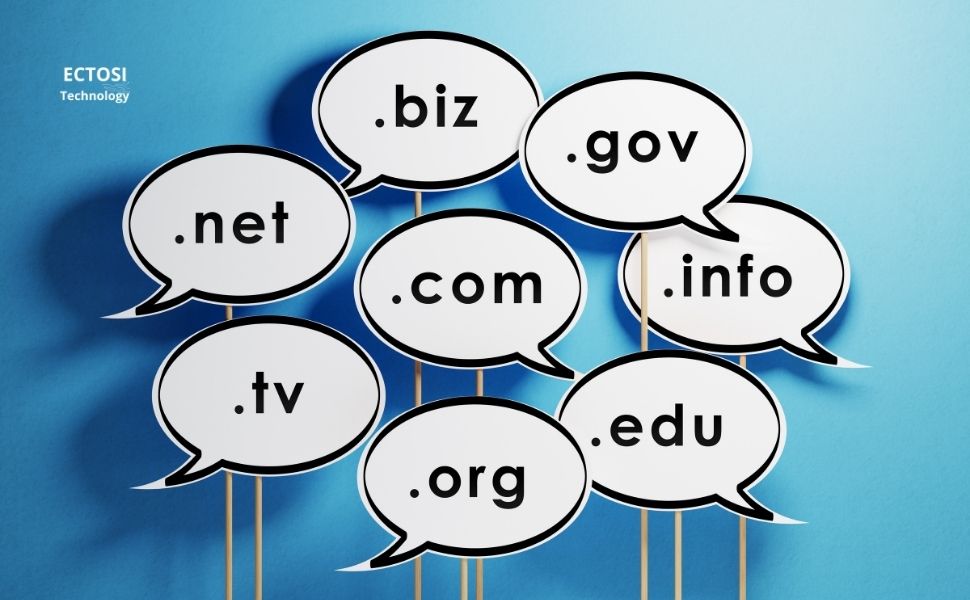
A domain is one of the first things people come across online.
It appears in your website address, your email, and often stays with your brand for years.
That is why it is worth choosing it carefully and thoughtfully.
Many people treat a domain as a small technical detail. Something you simply need to buy in order to launch a website.
In practice, it is a more important decision than it may seem.
A good domain should be:
- simple,
- clear,
- easy to remember,
- aligned with your brand,
- convenient for everyday use.
It does not need to be perfect or especially “marketing-driven.” It just needs to be practical and not make things harder for you or your audience.
What exactly is a domain?
A domain is simply the address of your website, for example:
yourbusiness.comectosi.comyourbrand.com
This is the address a user types into a browser, sees in search results, or receives in an email.
A domain also often becomes part of your brand’s everyday communication, because it appears in:
- email addresses,
- marketing materials,
- social media,
- footers,
- business cards,
- offers and documents.
That is why it is worth looking at it not only from a technical perspective, but also from a branding one.
Why does choosing a domain matter?
Because a good domain helps create a professional impression of your brand from the very first contact.
If the website address is simple and logical, users will:
- remember it more easily,
- type it more quickly,
- make fewer mistakes,
- connect it with your brand more naturally.
On the other hand, a domain that is too long, complicated, or awkward-sounding can create unnecessary friction.
It is not that a bad domain will “ruin a project.”
A good domain simply makes it easier to build a consistent online presence.
A domain works best when it is short and simple
This is one of the most important rules.
The simpler the domain, the better. Ideally, it should be:
- easy to read,
- easy to write,
- easy to say over the phone,
- and easy to remember after hearing it once.
A short domain will not always be available, but it is still worth moving in that direction.
For example:
- better:
yourbrand.com - worse:
best-super-business-services24.com
The more characters, hyphens, and combinations you add, the greater the chance of mistakes.
The domain should fit your brand
Ideally, a domain should be aligned with your brand name, business, or the main direction of your project.
That does not mean it has to be identical to your full registered company name.
In practice, a domain often works better when it is based on:
- the brand name,
- a shortened business name,
- the name of a service,
- or a simple, easy-to-read variation.
The most important thing is that it feels logical and is easy to associate with your brand.
If your brand is called ECTOSI, then a domain such as:
ectosi.plectosi.com
will usually work much better than something random or overly descriptive.
Should you use keywords in a domain?
Sometimes yes, but not always.
In the past, domains like these were very popular:
websitedesignlondon.comcheapseo24.combestonlinestores.com
Today, this is no longer necessary, and often it just looks unnatural.
If you can combine simplicity with a clear message, that is great.
But it is not worth stuffing every possible keyword into your domain.
In most cases, what works better is:
- a strong brand,
- a simple name,
- easy spelling,
- and consistent communication.
Keywords can make sense for very specific niche projects or content websites. For most brands, however, a more brand-focused domain is the safer choice than one that feels artificially “SEO-made.”
Is it better to choose .pl, .com, or another extension?
That depends on who your offer is aimed at and how you want to develop your brand or project.
.pl
A good choice if you mainly operate in Poland and target a Polish audience.
.com
A good option if:
- you want to operate more broadly,
- your brand has a more international character,
- you want to reach people outside Poland,
- or the
.plversion is already taken.
Other extensions
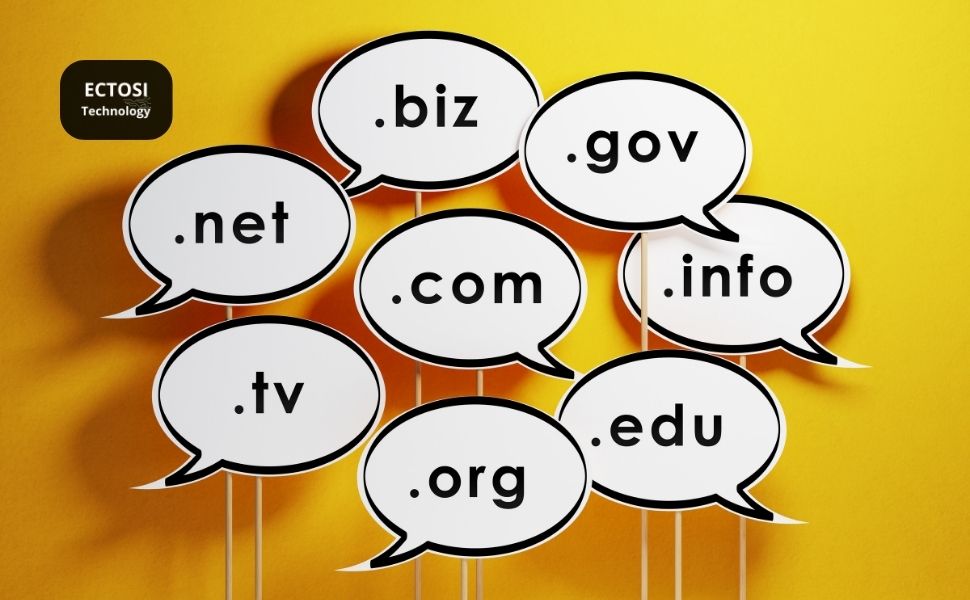
Extensions such as:
.eu.net.co.online.studio.agency
can sometimes make sense, but they are usually less intuitive than .pl or .com.
For most brands and projects, the safest starting point is:
.plfor the Polish market,- or
.comif the brand is meant to grow more broadly.
Is it worth buying several versions of a domain?
In many cases, yes.
If possible, it is worth considering buying a few key variations, for example:
.pl.com
or versions:
- with and without a hyphen,
- similar alternatives if there is a risk of confusion.
This is not always necessary, but it can help you:
- protect your brand,
- reduce user mistakes,
- avoid a situation where someone else takes a similar domain.
Usually, one domain is chosen as the main one, while the others are redirected to it.
Should you use hyphens in a domain?
In most cases, it is better to avoid them.
A domain without hyphens is usually:
- simpler,
- easier to remember,
- easier to say out loud,
- and more natural visually.
A hyphen can sometimes help if the version without it becomes unclear or is already taken.
But if you can choose between:
yourbusiness.comyour-business.com
the first option is usually better.
Should you use special characters or local letters?
Usually not.
Technically, it may be possible, but in practice it often creates unnecessary confusion.
Most users are used to domains without special characters, so they are:
- easier to type,
- easier to share,
- easier to use in emails and marketing materials.
That is why it is safer to choose domains like:
mybusiness.com
instead of ones with accented or special letters.
Simple and practical is usually the best option.
What kinds of domains are better to avoid?
It is worth being careful with domains that are:
- very long,
- hard to spell,
- unclear,
- full of numbers,
- full of hyphens,
- too generic,
- awkward-sounding,
- easy to confuse with another brand.
It is also better to avoid names that:
- sound bad when spoken out loud,
- are difficult to spell letter by letter,
- look good only in theory but are inconvenient in real use.
A simple test is this:
Could you say this domain over the phone to someone hearing it for the first time without causing confusion?
If not, it is probably worth looking for a simpler option.
Does the domain have to match the brand or business name exactly?
Not always.
A full legal business name is often too long or simply impractical as a domain.
For example, a registered business name might be:
ECTOSI Technology Piotr Sławek
but as a domain, something like this will work much better:
ectosi.plectosi.com
That is completely normal.
A domain should first and foremost be convenient and practical. It does not need to copy the full legal name exactly.
What should you check before buying a domain?
Before making a choice, it is worth checking a few things:
1. Is the domain available?
That is always the first step.
2. Is the name too similar to another brand?
This matters both practically and from a branding perspective.
3. Does it look good in a website address and email?
For example:
office@ectosi.com
4. Is it easy to read and remember?
It is best to test it out loud.
5. Will it still fit your brand in a few years?
It is worth thinking not only about what works today, but also about the future growth of the project.
If you choose a domain that is too narrowly tied to just one service, it may feel limiting later on.
What matters more: the perfect domain or making a decision quickly?
In practice, it is better to make a good and sensible decision than to spend months looking for the perfect domain.
Many people get stuck at this stage because they want a name that is:
- perfect,
- short,
- available,
- strongly brandable,
- SEO-friendly,
- and ideally available in both
.pland.com.
Sometimes, you simply cannot have everything at once.
That is why it is worth looking for a domain that is:
- clear,
- sensible,
- aligned with your brand,
- practical.
That is usually more than enough.
The simplest rule: the less overthinking, the better
If there is one rule worth remembering, it is this:
A good domain should be simple.
Not overcomplicated.
Not overloaded.
Not strange.
It should support your brand, not make it more difficult to build.
Summary
Choosing a domain is a technical decision with very practical importance in the everyday life of a brand.
A good domain should be:
- simple,
- clear,
- easy to remember,
- aligned with your brand,
- convenient to use,
- and still make sense in the future.
It does not need to be perfect.
It just needs to be good and practical.
Because that is exactly the kind of domain that best supports a professional online image.
Want to create a website and choose the right domain?
If you are planning your own website and wondering which domain will be best for your brand, it is worth looking at it not only from a technical angle, but also from a strategic one.
At ECTOSI, we help create modern websites and advise on solutions that are aligned with your brand, convenient for your audience, and ready for growth.
A good domain is a small detail that makes a big difference
We help plan websites from the ground up — from choosing the domain and structure to modern design and implementation.
Get in touch with us and see how we can help you start online the right way.